Ruby Slipper Deliverance
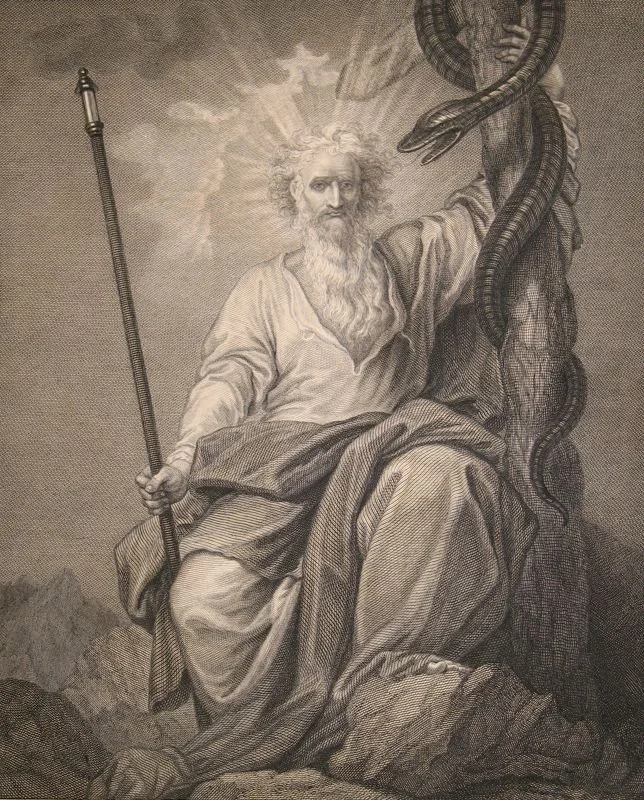
Numbers 21:4-9
From Mount Hor they set out by the way to the Red Sea, to go around the land of Edom, but the people became discouraged on the way. The people spoke against God and against Moses, “Why have you brought us up out of Egypt to die in the wilderness? For there is no food and no water, and we detest this miserable food.” Then the Lord sent poisonous serpents among the people, and they bit the people, so that many Israelites died. The people came to Moses and said, “We have sinned by speaking against the Lord and against you; pray to the Lord to take away the serpents from us.” So Moses prayed for the people. And the Lord said to Moses, “Make a poisonous serpent, and set it on a pole, and everyone who is bitten shall look at it and live.” So Moses made a serpent of bronze and put it upon a pole, and whenever a serpent bit someone, that person would look at the serpent of bronze and live.
1 Corinthians 1:18-24
For the message about the cross is foolishness to those who are perishing, but to us who are being saved it is the power of God. For it is written,
“I will destroy the wisdom of the wise,
and the discernment of the discerning I will thwart.”
Where is the one who is wise? Where is the scholar? Where is the debater of this age? Has not God made foolish the wisdom of the world? For since, in the wisdom of God, the world did not know God through wisdom, God decided, through the foolishness of the proclamation, to save those who believe. For Jews ask for signs and Greeks desire wisdom, but we proclaim Christ crucified, a stumbling block to Jews and foolishness to gentiles, but to those who are the called, both Jews and Greeks: Christ — the power of God and the wisdom of God.
Sermon
In the movie the Wizard of Oz, Dorothy is desperate for hope. After ascending from Kansas into the heavens, and upon her terrifying crash landing in the land of Oz, she is in trouble. The wicked witch of the east is after Dorothy, sending minions to destroy her, while Dorothy faces a smorgasbord of fantastical dangers. She needs to get home. All she has is three misfit friends, and a pair of ruby slippers.
Like Dorothy, we assume that the magical Wizard of Oz will rescue her, and save her from this ordeal. Or maybe his hot air balloon will deliver her back to Kansas. But as we know… the logical solutions aren’t going to work out. The obvious answers won’t help Dorothy’s situation.
What does?
The strangest, bizarrest, most foolish thing does: Dorothy’s ruby slippers. All she needs to do is tap her heels, say “there’s no place like home,” and poof! Absurdly, unexpectedly, impossibly — Dorothy is delivered from her crucible.
How strange.
“All she needs to do is tap her heels, say ‘there’s no place like home,’ and poof! Absurdly, unexpectedly, impossibly — Dorothy is delivered from her crucible.”
If I had to guess, for some of us in the room, when we read today’s passage from the Book of Numbers, we might be thinking the same thing. Some of us might even be wondering whether it’s any more real than the Wizard of Oz.
After all, the math and the logic doesn’t check out here. Deliverance doesn’t show up in any of the logical, understandable, expected ways. So let’s trace these Hebrews’ Ozian journey from danger into deliverance.
To start, you may have noticed an oddity in the people’s grumbling. Because they are lifting up two complaints that contradict each other. They say “There is no food and no water!” seeming to argue that their situation is far worse than Moses thinks. They are catastrophizing, in a way. Then, in the very same breath, they complain again, saying, “We detest this miserable food.” But to amplify this irony even further, the food they’re referring to is none other than holy manna. Manna — that sweet food divinely, strangely, unexpectedly given by God. The food of deliverance and God’s provision.
So which is it? Are they truly destitute? Or are they discontent?
The text grows darker. The Hebrew people ask, “Why have you brought us up out of Egypt to die in the wilderness?” And it’s only after they ask this that their lives are in immanent jeopardy. It’s only after they ask this that the serpents arrive. When these serpents take up residence among the Hebrew people, it’s then that they realize there’s “nothing so bad today that can’t be worse tomorrow.” (To quote a Hungarian proverb).
As a tangent, we need to address the elephant in the room: the text recounts that God is the one who sends these poisonous serpents to kill the Hebrews, just as it is God who decides to save some of them with a strange remedy. Though this is jarring, and perhaps disorienting, we might want to put on our ancient ears for a minute. In the ancient Near East, there were snake cults: religious groups that practiced magic, using snakes to cure diseases and injuries. Essentially, practitioners of folk medicine and magic. This text has fascinating similarities, but with a key twist: instead of the worship of snakes being saving, it is the worship of the one true God that is saving. The power of God—the sovereignty of God—is put on full display. Magic snakes are no match for the God of the Hebrew people. And so, we should be careful not to hear this as a theological claim that our suffering is a divine punishment for sin. Instead, we might hear this as a theological claim of God’s primacy and power to redeem the world.
“We should be careful not to hear this as a theological claim that our suffering is a divine punishment for sin. Instead, we might hear this as a theological claim of God’s primacy — about God’s power to redeem the world.”
So returning to our saga—after unpacking the depth of the suffering and the true condition of these Hebrew people—the text shifts. First to confession, then to deliverance. The Hebrews say, “We have sinned by speaking against the Lord and against you; pray to the Lord to take away the serpents from us.” And when Moses prays, God changes course, offering deliverance.
If we hadn’t heard this story, we might come up with a range of logical, expected solutions. Perhaps God simply sends the snakes away, and people start recovering naturally. Perhaps God shows them a nearby plant that acts as an antidote. Perhaps God gives them weapons, or has them pray, or reveals the secrets of modern medicine.
But like the Wizard of Oz, deliverance isn’t logical, or straightforward, or expected. It’s beyond logic, beyond reason, beyond expectation. It shows up in ruby slippers instead of hot air balloons. God tells Moses, of course, to make a bronze or copper serpent, to place it on a pole, and have everyone look at it and live.
Strangely, we don’t learn whether the serpents disappear. The text remains quiet — people are healed, the bronze serpent is carried all the way into Canaan, and eventually shows up again in the Book of 1 Kings. But the serpents? We don’t know if they actually left. It might be a little bit like COVID — still around and never quite disappearing, although our relationship to it changes.
But whatever the case, this is definitely a ruby-slipper-deliverance that we couldn’t expect.
“But like the Wizard of Oz, deliverance isn’t logical, or straightforward, or expected. It’s beyond logic, beyond reason, beyond expectation. It shows up in ruby slippers instead of hot air balloons.”
This is to be certain an essential story to our understanding of the cross of Jesus Christ.
Paul addresses this unexpected, strange, foolish deliverance — the same unexpected, strange, foolish deliverance in the bronze serpent and the cross of Christ.
We hear Paul tell us that “the cross is foolishness to those who are perishing, but to us who are being saved it is the power of God.”
The cross of Christ, just like the bronze pole in the wilderness, bears no sacredness in and of itself. The significance is instead what is on it — Jesus of Nazareth, the Christ, the anointed one, the Son of God, the suffering servant of the Messiah. And Christ and his crucifixion is certainly foolish.
Because who is Christ? Christ is the eternal, Almighty Creator, whose power is beyond comprehension and understanding. But just as surely as Christ is the Almighty, Christ became incarnate in a helpless, tiny, vulnerable infant. Christ—the King of Kings—was born to a disenfranchised, marginalized people group. Christ—the Lord of all—came not to be served but to serve. And Christ—the Savior of all creation, our deliverance—was nailed to the cross, humiliated, and died in agony. Now, the church of the first century, and the church of the twenty-first century, worship a political and religious martyr, who was brutalized by the empire. The church just as surely proclaims the dead being raised to life — an impossibly foolish idea, an unnatural reversal of the life cycle, beyond all comprehension.
Christ is a ruby slipper deliverance. The deliverance that isn’t expected, isn’t logical, isn’t straightforward.
Praise be, because our lives are in desperate need of hope and deliverance.
…
One of the many challenges of hope is that true hope is divorced from expectation. Not that our hope can’t be expectant, but hope isn’t the same as expectation.
The life of faith is in part about finding hope even in the midst of complete and utter calamity. It’s about finding hope when everything has fallen apart, and everything is grim and poised for disaster. It’s about hoping, even when the wizards we trust turn out to be liars and frauds.
But if we open our Presbyterian confessions, and open our Bibles, and open our history books, we find again and again, unexpected, unconventional, illogical, foolish deliverance. Unexpected, unconventional, illogical, foolish reasons to hope.
When we read the Confession of Belhar, we remember that the Church prayed and labored feverishly for the end of Apartheid in South Africa, despite all odds. And sure enough, though there was no reason to expect it, deliverance did arrive.
When we read the Barmen Declaration, we remember that the Church prayed and labored feverishly for the end of the Third Reich, and despite all odds, and despite all expectation, sure enough, deliverance did arrive.
“The life of faith is in part… about finding hope when everything has fallen apart, and everything is grim and poised for disaster. It’s about hoping, even when the wizards we trust turn out to be liars and frauds.”
When we read the scripture—of suffering spanning generations, of horrific sickness and poison, of injustice long perpetrated, of evil living and breathing in the world—we remember again and again that God’s deliverance does show up. But it never shows up how we expect it. It never shows up logically, or straightforwardly. It shows up in bronze serpents and ruby slippers. And all this deliverance, all this foolishness, all this unexpectedness, is incarnate in the life and crucifixion and resurrection of Jesus Christ.
It is foolish to believe, and foolish to hope — and yet, it is precisely the power of our faith.
When wise wizards deceive us, and hot air balloons leave without us—seeming to leave us without hope—look here, into your Bible, into our confessions. Because rescue has a habit of showing up wherever we least expect it — in bronze serpents, in Easter mornings, and in the power of Christ crucified.