Storytellers and Scribes
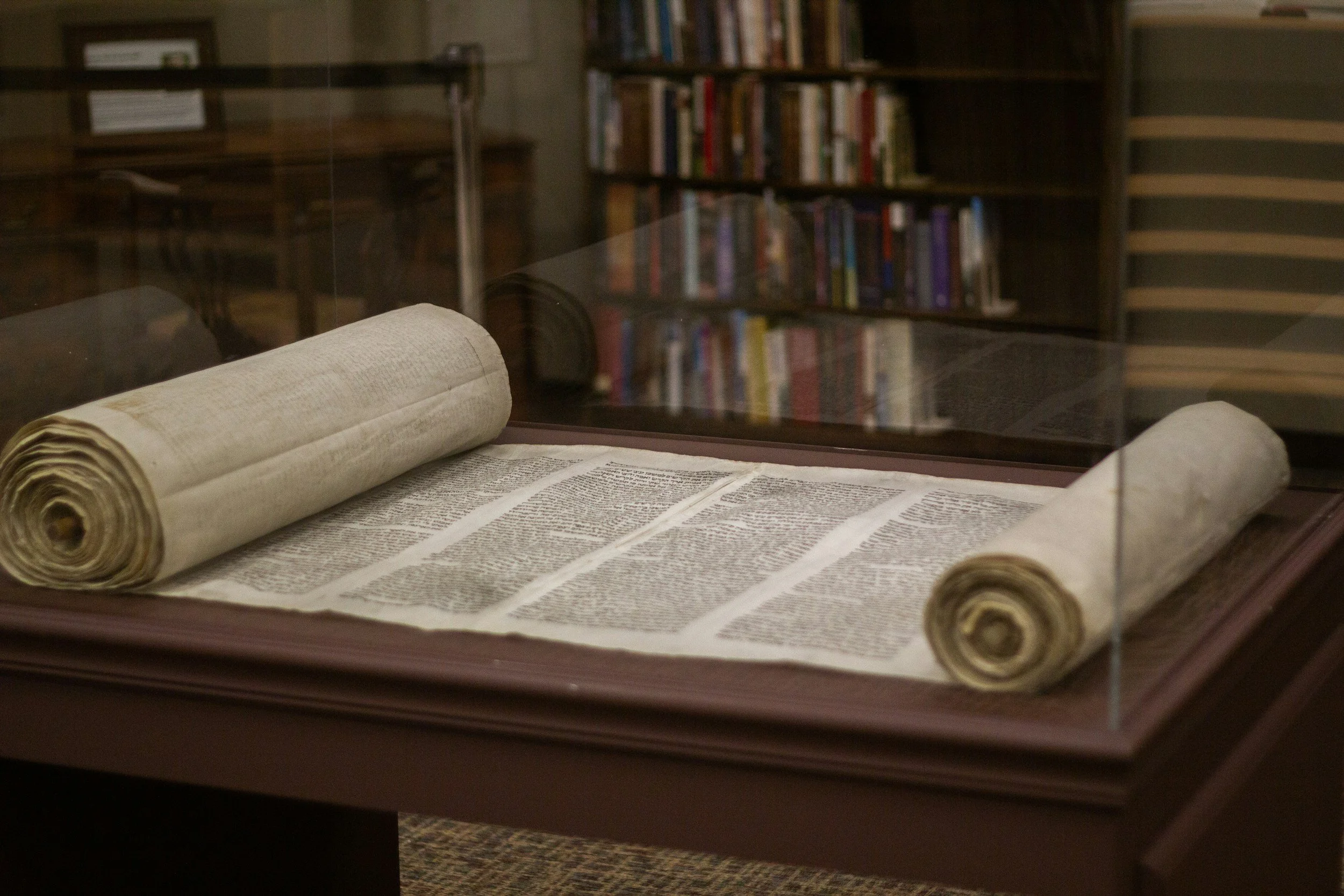
Job 19:23-27a
“O that my words were written down!
O that they were inscribed in a book!
O that with an iron pen and with lead
they were engraved on a rock forever!
For I know that my vindicator lives
and that in the end he will stand upon the earth;
and after my skin has been destroyed,
then in my flesh I shall see God,
whom I shall see on my side,
and my eyes shall behold, and not another.
Leader: This is the Word of God for the people of God.
People: Thanks be to God.
Sermon
How do you solve a problem like Job?
If any preacher has a clear-cut, straightforward, morally-certain, systematic way to deal with Job, they’ve probably read Job without really reading Job. This book and all that’s inside it is simply a royal mess. It begins with a short preface, where his family’s wealth is destroyed; then their servants are killed; then his children are killed in a natural disaster. Everything after is the main entree. There are weird words in our translations, strange dialogue between God and ethereal beings, and a cast of characters who offer meandering, jumbled poetry. There are feelings coming out sideways, explosive emotions, mixed-up thinking, and relationships that seem complicated at best.
But to make matters even more messy, it’s hard to figure out what is inside of the Book of Job. There is so much difference in the manuscripts and tradition that a prominent scholar of Job said “no reliance can be placed in any of them.” In other words, the Book of Job is a sacred expedition into suffering, where we can only see the forest, but none of the trees.
So despite all of its disorientation and jumbled guts, why do we read the Book of Job as an explanation for suffering? Or a textbook about how we’re “supposed” to suffer? We’ve taken this hot mess in our Bibles and instead of valuing its complexity and unsettledness, we pretend it is trying to tell us that “everything happens for a reason.”
How do you solve a problem like Job? We take him and this book on its own terms.
I bring up all of those peculiarities not to make us throw our hands up in the air in confusion. Instead, I’ve brought all of those things up because it is emblematic of deep, anguished suffering. When we find ourselves trapped by despair, the world starts to fragment. Seams start to rip, we start looking through funhouse mirrors, and our minds become inebriated by pain. When we find our bodies reeling from the toxic shock of our own wretchedness, nothing adds up. Emotions start coming out sideways; we forget what we said only a moment ago; and nothing is linear anymore. This is sometimes why telling someone “everything happens for a reason” can leave them feeling unheard or unloved — when we are besieged by anguish, there are no straight lines, 90-degree angles, or tidy equations; there is only an upside-down, inside-out world they are trapped inside.
“We’ve taken this hot mess in our Bibles and instead of valuing its complexity and unsettledness, we pretend it is trying to tell us that ‘everything happens for a reason.’”
Today, we hear Job in the throes of a lament. He starts it with these words: “How long will you torment me and break me in pieces with words? Are you not ashamed to wrong me?” Then there is this litany of grievances; Job starts naming way after way that he has suffered. And then, Job explodes with today’s verses: “O that my words were written down! O that they were inscribed in a record! O that with an iron pen and with lead they were engraved forever.” Job says that he will not see his vindicator until “after my skin has been destroyed.”
Job places his hope in this vindicator, and vindication is what he longs for. He hopes that this vindicator (or “redeemer”) will set the record straight and clear Job of any and all blame. To clear him of the guilt that others have placed upon him on account of his suffering.
We see this in the preceding verses, too: Job is fixated on the story; telling his story with his own understanding. He wants to “inscribe” and “engrave” his story as a permanent record.
…
Every year, there are countless authors who publish their own stories as a record of their life. Jennette McCurdy was one of those people.
McCurdy was a child actor on Nickelodeon, most popular for her roles in iCarly and Cat and Sam. She grew up under the thumb of her mother, who was narcissistic, abusive, and highly manipulative. McCurdy experienced profound trauma directly and indirectly from her mother, traumas that contributed to her struggles with OCD, eating disorders, and addiction.
She titled her memoir this: “I’m Glad My Mom Died.”
In interviews, McCurdy shared many different reasons for penning the book, particularly because her experiences mirror so many women who experience trauma, abuse, and mental illness. But one of the reasons might sum it up best. In an interview with The Los Angeles Loyolan, McCurdy said this about her memoir: “I think that I earned that experience of grief… I want this to mean something to someone other than just me.”
McCurdy lived a life that was defined exclusively by her mother. She said, “acting was the goal and the purpose, and that was what was going to help [my mom]. Her goals were my goals.” As an actor, things were no different — Nickelodeon, television audiences, and executives defined who Jennette was and who she would be. This made it all the more important that she told her story in her words.
For once in her life, she could tell her story, and for once in her life, her authentic voice would be understood. Job is desperate for that, too.
“Telling someone ‘everything happens for a reason’ can leave them feeling unheard or unloved — when we are besieged by anguish, there are no straight lines, 90-degree angles, or tidy equations; there is only an upside-down, inside-out world they are trapped inside.”
This leads us to a startling realization: before any social or material change to his circumstances, and before anything concretely changes in his life, Job’s redemption comes in the form of an authentic articulation of his inner life. The seed of Job’s redemption begins in a record of what has truly happened to Job; in making this record, he would find restoration and cleansing. Jennette showed us the power of this redemption: in naming what happened to her, she found a way to move out of the suffering and behaviors which entrapped her. Job’s redemption begins in him putting a crowbar to every false narrative, every slander, every piece of gossip, and even his own forgottenness, and prying all of it open so that truth might enter.
Then… after naming these things before God and humanity, and after grabbing hold of truth to bring it into this world, Job’s deliverance culminates in the second half of today’s passage: “then in my flesh I shall see God, whom I shall see on my side, and my eyes shall behold.” In naming the truest condition of his life and the world around him, he trusts that God has truly heard it. After all, it would be futile for Job to name his suffering, for no one to hear it, and for no one to vindicate him.
The difference between a memoir and a diary is whether someone else will read it. Jennette could have left her writings in a desk drawer, but instead, there was power in it being read and understood. It was important that other women would come to know her story. It mattered that other children of dysfunctional families would connect. It was in naming and in being understood that Jennette found closure.
Job’s deliverance culminates with God understanding him. If we were to read all of Job, we see God reply, essentially saying, “I hear and understand you.”
“This leads us to a startling realization: before any social or material change to his circumstances, and before anything concretely changes in his life, Job’s redemption comes in the form of an authentic articulation of his inner life.”
God is always beckoning us to participate in this redemption. The Book of Job names three friends, none of whom have any luck in giving Job advice or telling him what’s happening. We won’t have any better luck in trying to make sense of everything for others. If we tell someone that their suffering happened for a reason—regardless if that is true or not—we will always fall flat.
Instead, God beckons us to participate in redemption by listening. I don’t mean that in an aural sense, or letting others vent. By listening, I mean perceiving, understanding, fully and deeply knowing another person’s sufferings. Sometimes it is important to testify to God’s character; but when others suffer, it is important to also join others in testifying to God what they are speaking. In other words, to pray with them to God.
How do you solve a problem like Job? We join God in listening and perceiving what he is crying out for, giving him the grace to tell his own story with his own words. We stop becoming the storyteller, and instead become the scribe — the one who helps others’ pain be written, known, and remembered before God.