For the Bible Tells Us So
John 13:1-17, 31b-35
Now before the festival of the Passover, Jesus knew that his hour had come to depart from this world and go to the Father. Having loved his own who were in the world, he loved them to the end. The devil had already decided that Judas son of Simon Iscariot would betray Jesus.
And during supper Jesus, knowing that the Father had given all things into his hands and that he had come from God and was going to God, got up from supper, took off his outer robe, and tied a towel around himself. Then he poured water into a basin and began to wash the disciples’ feet and to wipe them with the towel that was tied around him.
He came to Simon Peter, who said to him, “Lord, are you going to wash my feet?” Jesus answered, “You do not know now what I am doing, but later you will understand.” Peter said to him, “You will never wash my feet.” Jesus answered, “Unless I wash you, you have no share with me.” Simon Peter said to him, “Lord, not my feet only but also my hands and my head!” Jesus said to him, “One who has bathed does not need to wash, except for the feet, but is entirely clean. And you are clean, though not all of you.” For he knew who was to betray him; for this reason he said, “Not all of you are clean.”
After he had washed their feet, had put on his robe, and had reclined again, he said to them, “Do you know what I have done to you? You call me Teacher and Lord, and you are right, for that is what I am. So if I, your Lord and Teacher, have washed your feet, you also ought to wash one another’s feet. For I have set you an example, that you also should do as I have done to you. Very truly, I tell you, slaves are not greater than their master, nor are messengers greater than the one who sent them. If you know these things, you are blessed if you do them.
When he had gone out, Jesus said, “Now the Son of Man has been glorified, and God has been glorified in him. If God has been glorified in him, God will also glorify him in himself and will glorify him at once. Little children, I am with you only a little longer. You will look for me, and as I said to the Jews so now I say to you, ‘Where I am going, you cannot come.’
I give you a new commandment, that you love one another. Just as I have loved you, you also should love one another. By this everyone will know that you are my disciples, if you have love for one another.”
Sermon
Jesus taught a lot of people about a lot of things. His disciples had a front row seat in Jesus’ classroom, listening to what he had to say, getting extra commentary, and growing in mind and spirit thanks to it all. As they gathered around Jesus at this final meal, they were still works in progress, of course — but compared to when they began, they were remarkably different. They knew remarkably more about God and what it means to be a disciple.
For us, as disciples of Jesus Christ, we also know a lot of things. Starting off, there’s a song we all know by heart. It begins with this: “Jesus loves me this I know, for the Bible tells me so.”
What else does the Bible tell us so?
We know that God loves our neighbor, too.
We know that God wants us to love one another.
We know that God loves the natural world, its rivers and lakes and oceans, and everything that lives on it.
We know that God blesses the poor and outcast, rescues the needy, lifts up the brokenhearted, and humbles the mighty.
We know that God detests violence and harm of every kind.
How do we know this? For the Bible tells us so.
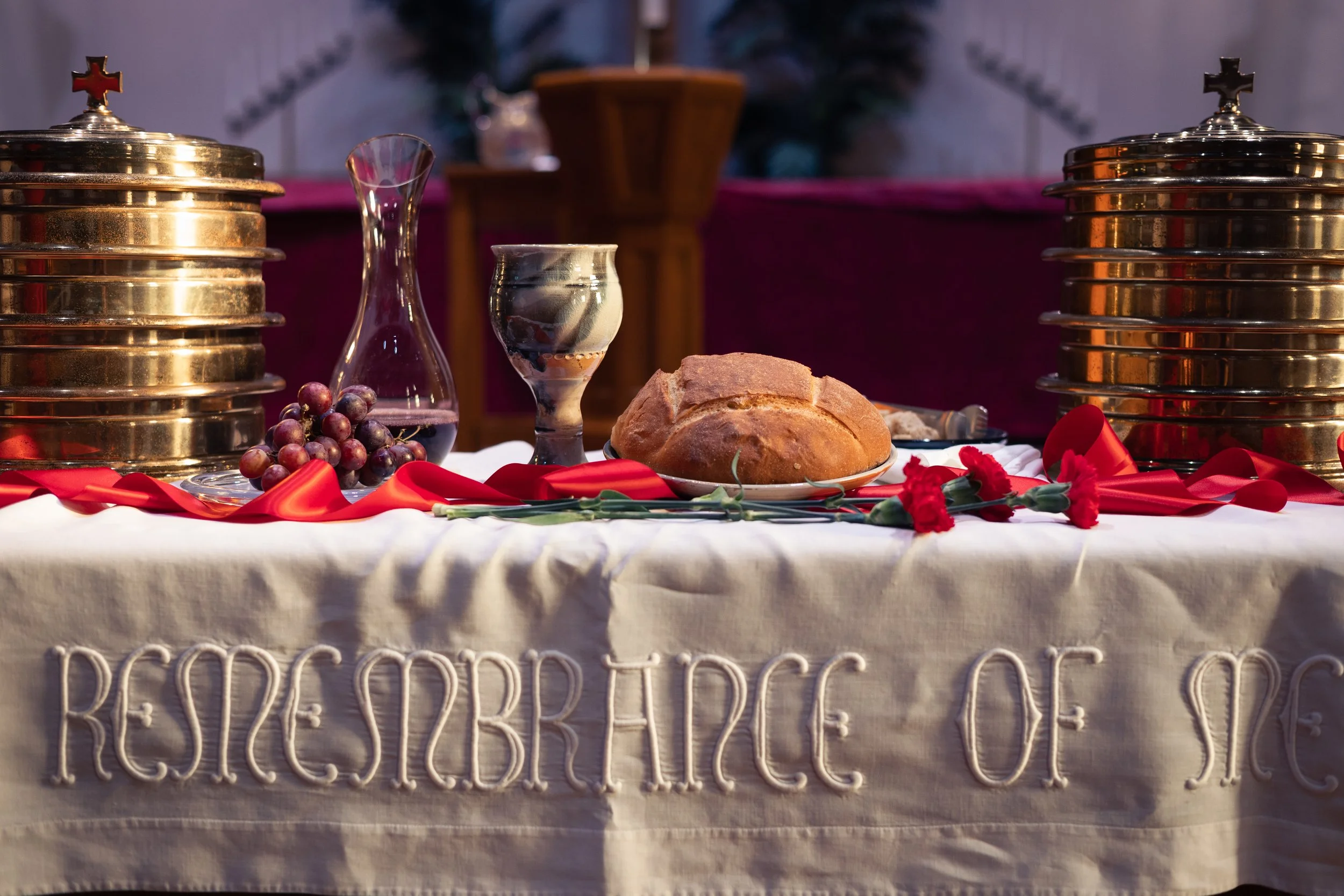
And as we share this meal with Jesus’ disciples, we hear Jesus comment on all this: “If you know these things, you are blessed… if you do them.”
There’s a difference between knowing and doing. We can fill our heads with all the knowledge we can. We can beat everyone at Bible trivia, or answer every question about theology there is, or diagram the timeline of the Hebrew Bible. But that doesn’t make us disciples on its own.
And so, the Last Supper isn’t ultimately concerned with us knowing stuff. It’s the turning point at which we either step into bold, living discipleship, or simply allow our spirits to atrophy.
We know that God loves our neighbor, too, and so, Jesus asks us to go and feed them, serve them, listen to them, advocate for them.
We know that God wants us to love one another, and so, Jesus asks us to pray for the person next to us in the pews, get to know them, care for them, and offer a little extra kindness.
We know that God loves the natural world, its rivers and lakes and oceans, and everything that lives on it, and so, Jesus asks us to clean our pollution, end earth’s exploitation by corporate profiteering, and to change our way of life for its preservation.
We know that God blesses the poor and outcast, rescues the needy, lifts up the brokenhearted, and humbles the mighty. And so, Jesus asks us to speak back against evil and condemn those who step on the necks of the marginalized.
We know that God detests violence and harm of every kind, and so, Jesus asks us to believe those who speak up about their hurt, to care for them, and shelter them in safety.
Jesus says, “If you know these things, you are blessed… if you do them.”
That is what makes us disciples of the Lord. Not by knowing on its own; but instead, by enacting and sealing the mighty love of Jesus Christ to all the world.
Tonight, we will hear a long, painful story about the Passion of Jesus. But we aren’t hear to simply know that Jesus loves us. We’re here to go, and act, and change the world for his sake.
Jesus loves us, this we know.
Jesus wants us to go and change the world, this we know.
Jesus wants us to love, and hope, and advocate, and grow.
For the Bible tells us so.